How to Position Your Portfolio When War Headlines Hit the Markets

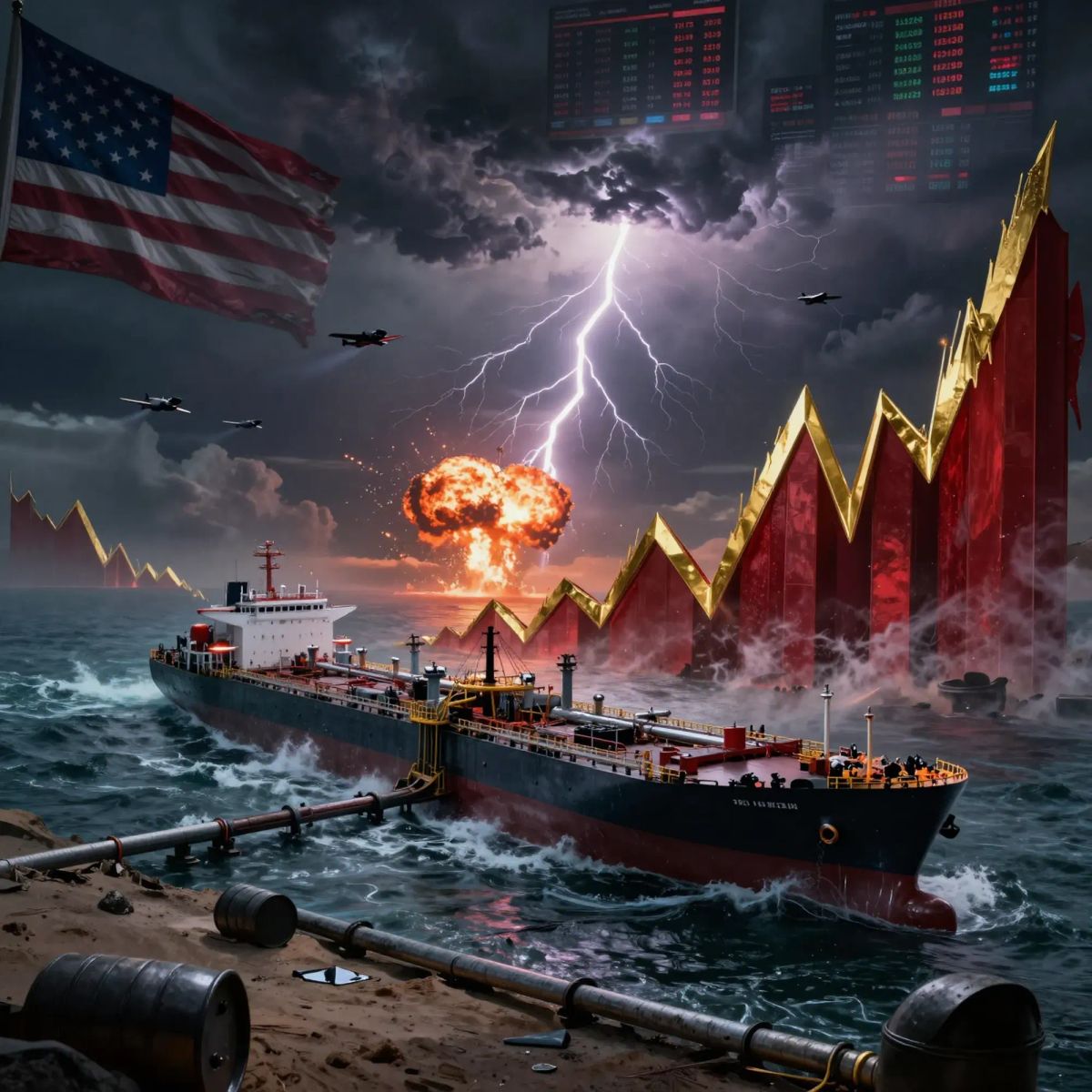
There was a time when war headlines would completely hijack my focus. I’d wake up, see escalation between the US, China, Russia or Iran, watch Oil, Gold or Bitcoin gap higher, see prices flashing red and immediately feel like I needed to do something. Not because my portfolio was drowning, but because the noise made me feel like I needed to do something. It felt like if I wasn’t adjusting positions in real time, I was behind.
What I eventually realised, is that the real money isn’t made in the panic. It’s made in the understanding of how money moves when pressure enters the system.
The first time I properly capitalised on a geopolitical move wasn’t because I predicted conflict. It was because I understood what conflict does to certain assets.
When tensions rise in oil producing regions, supply risk gets repriced before supply actually changes. Oil doesn’t wait for missiles to land, it moves on probability. So when oil moves, it drags narratives with it… inflation expectations, energy and defence stocks and also certain currencies.
What changed for me was understanding second-order effects. It’s not just “war equals buy gold.” It’s about asking what becomes strategically important when instability rises. Energy becomes strategic because supply security matters. Defence companies become strategic because governments expand budgets quickly when threats arise and certain commodities become strategic because trade routes become a risk. Capital doesn’t disappear in these moments, it rotates toward what suddenly matters more.
I’ve had clients message me during escalations saying they want to allocate aggressively. When headlines hit and oil starts running or markets get volatile, suddenly everyone wants exposure because they don’t want to “miss it.” That reaction is understandable, but it usually reveals something important - the portfolio wasn’t positioned beforehand. If you only feel urgency when the move is already happening, you’re reacting to momentum, not operating from structure. Real positioning happens before the excitement. When volatility arrives, you should be adjusting from strength, not scrambling to catch up.
Let me make this practical.
When conflict involves oil-producing regions, the first place money moves is crude oil. Not later. Immediately. Markets price in future supply risk before supply is actually disrupted.
Then you look at defense stocks. If tensions escalate and governments increase military budgets, defense contractors tend to benefit. So if you see defense names breaking into strength while the broader market is weak, that’s rotation. Money is shifting into sectors that become strategically important during conflict.
Gold is another one. When fear rises, gold often surges.
When US–Iran tension rises, I’m watching oil, defense, gold, bond yields, and the dollar. Not because I need to trade all of them, but because they tell me where money is going.
And making money during uncertainty is about following money - not predicting events.
Now let’s talk about actual positioning.
If your entire portfolio is in high-growth tech and leverage, you’re over exposed. The first step isn’t to panic sell everything. It’s to start trimming excess risk. Take profits where charts are extended. Create liquidity. Liquidity gives you power.
If markets sell off aggressively across the board while conflict headlines continue, that can create long-term buying opportunities in quality assets. Fear discounts good businesses. But you need cash available to take advantage of that.
This is where most people miss the opportunity. They are either fully invested and can’t buy, or fully panicked and can’t think.
Over the years, I’ve structured portfolios with layers for this exact reason. Some capital allocated to long-term growth. Some to assets that benefit from inflation or energy shocks. Some in liquid reserves. Some in tactical positions where theres clear momentum.
Not because I’m trying to guess wars. But because I accept that geopolitical tension is part of the global cycle.
Oil surges because supply risk increases. Defense stocks rise because spending increases. Gold moves because fear increases. Certain currencies strengthen because capital seeks safety.
If you understand that chain reaction, you stop reacting emotionally and start positioning strategically.
The key is simple, align with strength, reduce concentration and always keep enough liquidity to move when opportunity expands.
War doesn’t stop capital. It redirects it.
And if your portfolio is structured properly, you don’t just survive that redirection. You participate in it.
— Zack Rens,
The Young Founders Report